How ROUTINE Changed My View of Survival Horror

ROUTINE is often compared to Alien: Isolation, yet its vision and core mechanics were already established before Alien: Isolation was even announced. In this article, I break down why the similarities are more coincidental than influential, explore the reality behind ROUTINE’s long and turbulent development cycle, and examine where it truly belongs within the stalker horror subgenre.

There are some games that inspire me to become a developer and create my own horror experience, but ROUTINE is not one of them. The 3D models and textures are so high quality, the atmosphere so believable, and the sound design so flawless that I know I could never hope to compete with it. Instead of pushing me into game development, ROUTINE is keeping me out of it, leaving the work to people who clearly know what they are doing.

If you’d rather see ROUTINE in action, watch the video version of this review below!

What Is ROUTINE?

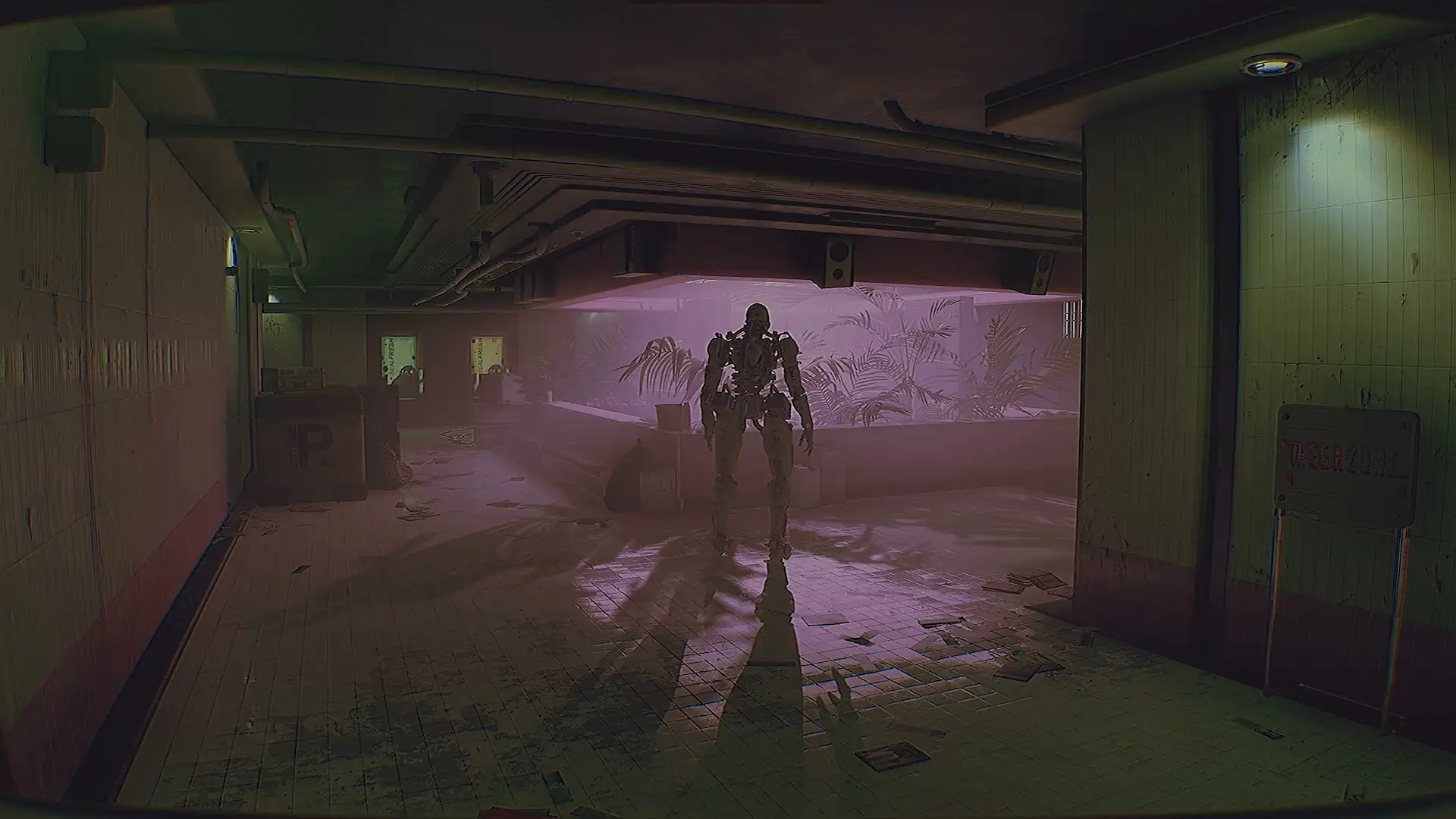
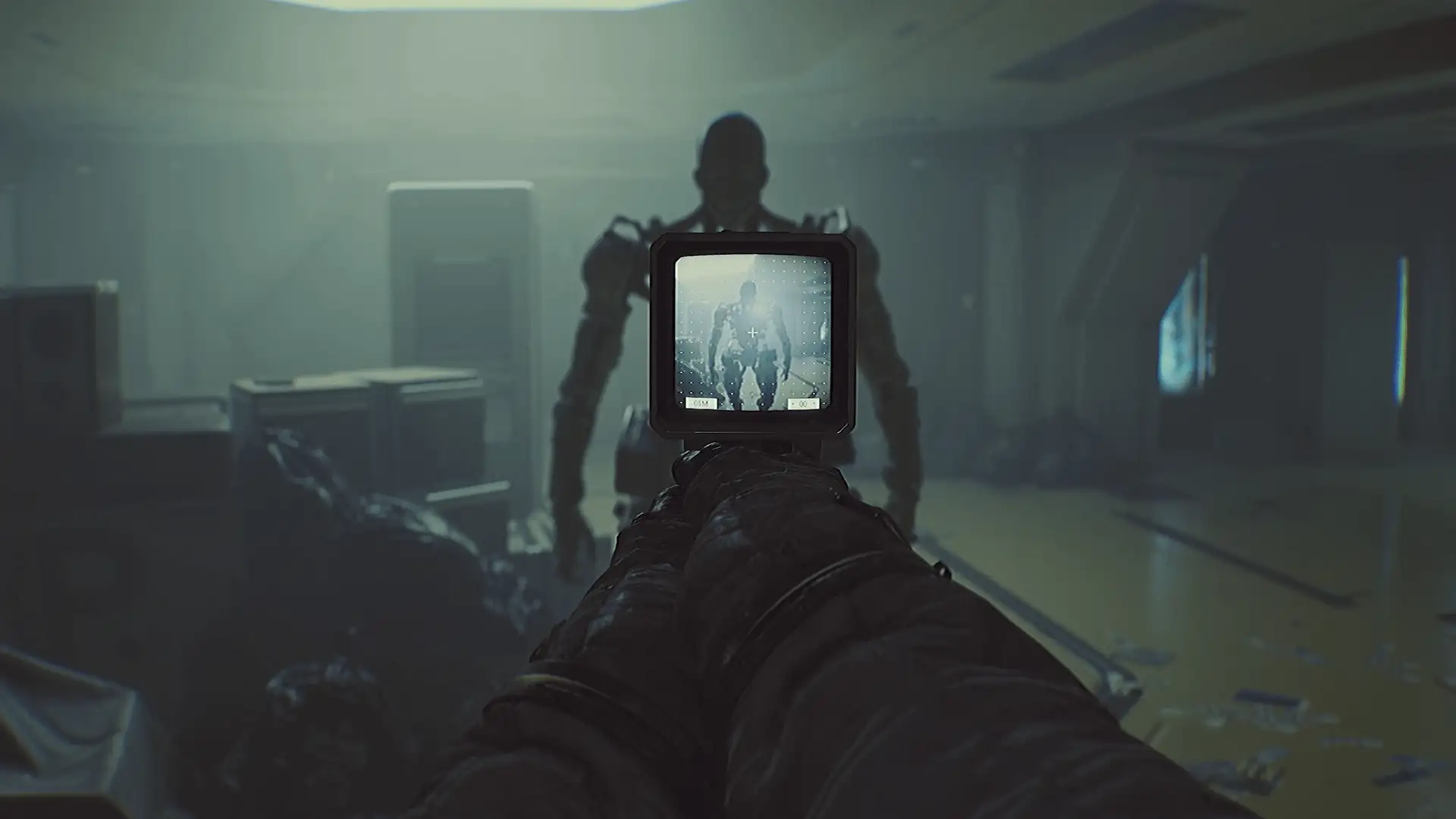
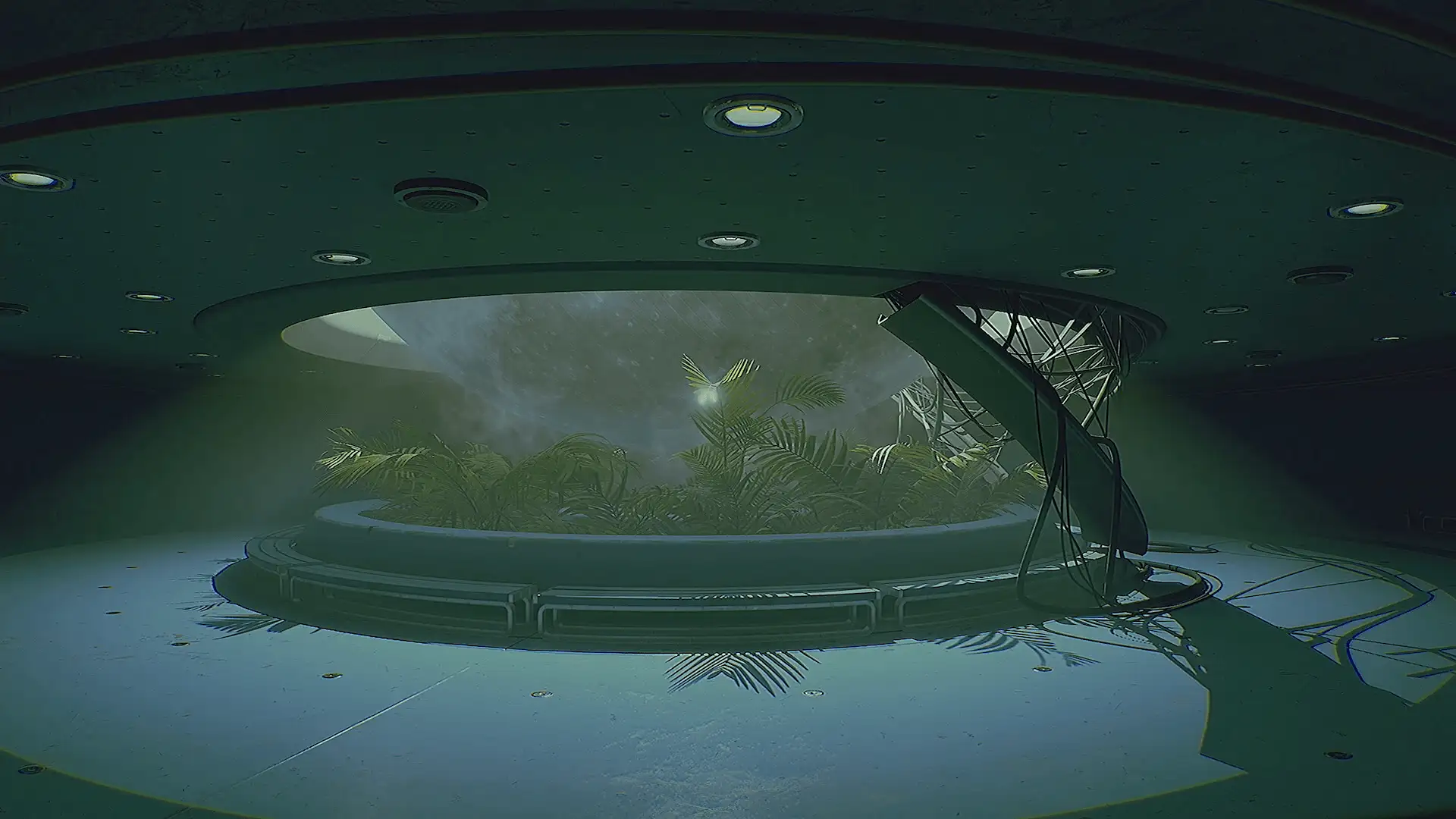
ROUTINE is a first-person sci-fi stalker horror game set within an abandoned lunar base, designed around a 1980s vision of the future. The game takes place in a distinctly analogue world, one that often feels like you are playing through a CRT display. This effect is pushed even further when viewing the environment through the handheld Cosmonaut Assistance Tool (C.A.T), which intentionally drops the resolution even lower.

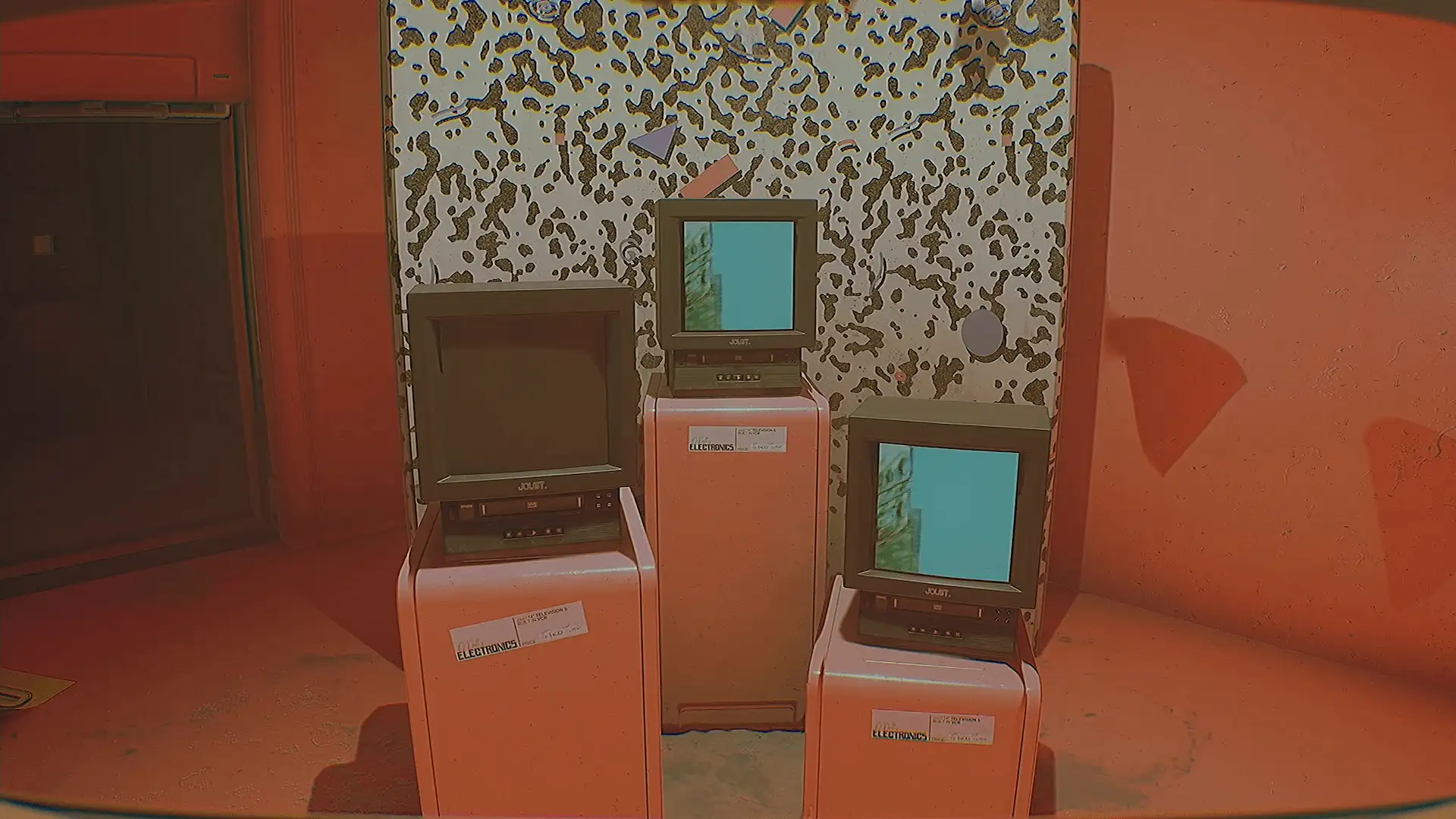
What makes ROUTINE so distinctive is how it balances extremes. It delivers moments of hyper-realistic detail, where individual fingerprints can be seen on monitors, while simultaneously presenting deliberately low-resolution visuals. Viewing enemies through the C.A.T, combined with the thick, oppressive atmosphere, creates a level of tension that is difficult to fully explain, but very effective. Somehow, this contrast makes the game feel even more unsettling. The fear of the unknown is multiplied when everything in the viewpoint isnt crystal clear.

There is no HUD, inventory, or traditional menus of any kind. There isn’t even a way to pause the game. You can press Start, but the world keeps moving, so you rarely feel safe. Even saving your progress doesn’t always guarantee safety. Save screens and menus are projected onto the walls of the environment, and you interact with them by walking up and using your C.A.T device. Unlike the comforting save rooms in Resident Evil, you are not completely protected while doing this. Most of the time you will be fine, but there are a few areas in the game where using these terminals still puts you at risk which only adds to the tension.

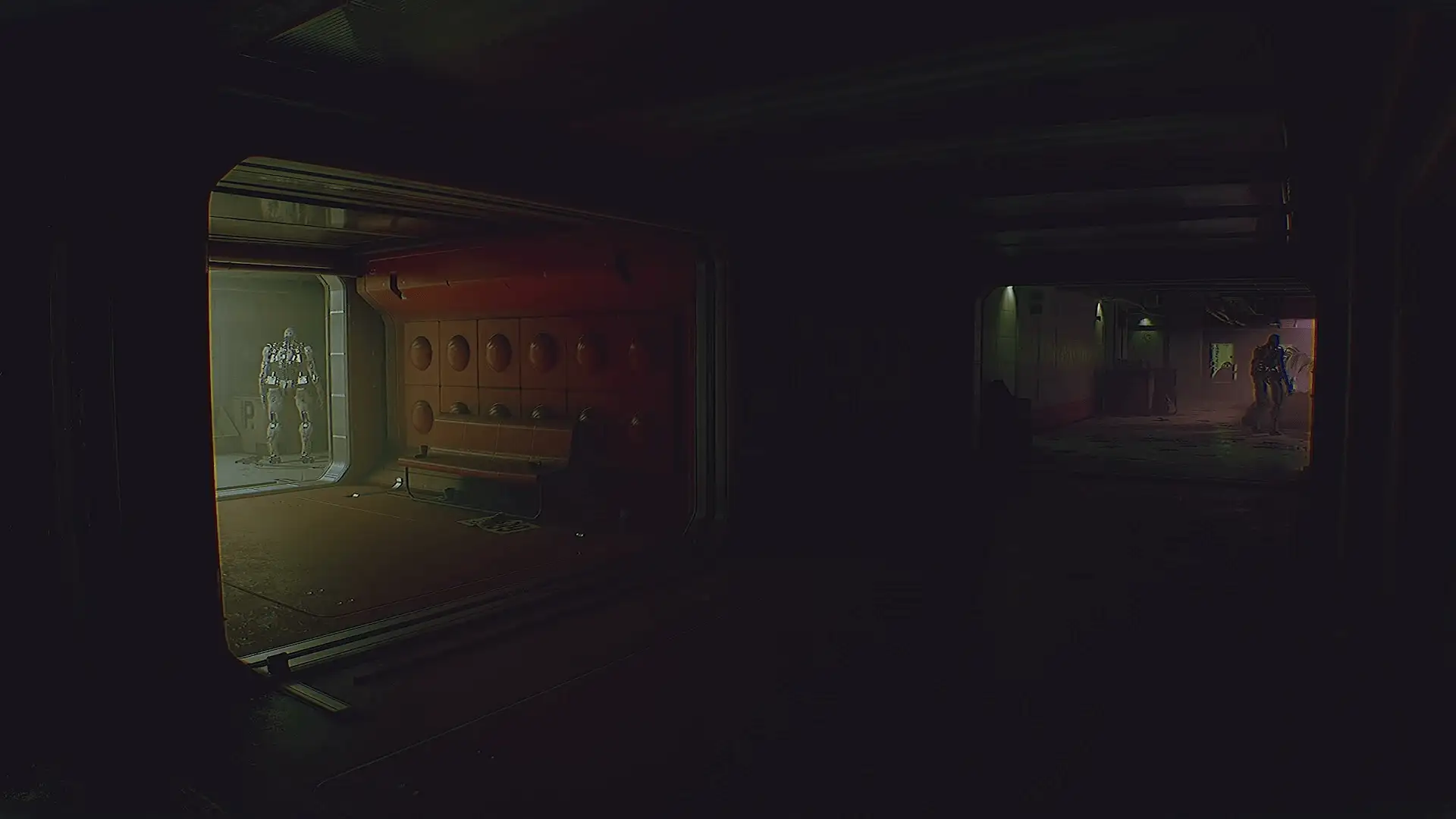
Despite wearing a spacesuit in the game, you are incredibly nimble. You can crouch very low to the ground, low enough to look through small gaps, crawl through vents, or peek around corners for Type-05 (T5) enemies on patrol. The T5 is not faster than you, but it is unpredictable and relentless. You can usually escape, but it is always tense. You get one chance to break free if it grabs you, but if it catches you again, it is game over. The heavy thud of its footsteps gives you a rough idea of how close it is, and hearing that sound grow nearer is deeply unnerving.
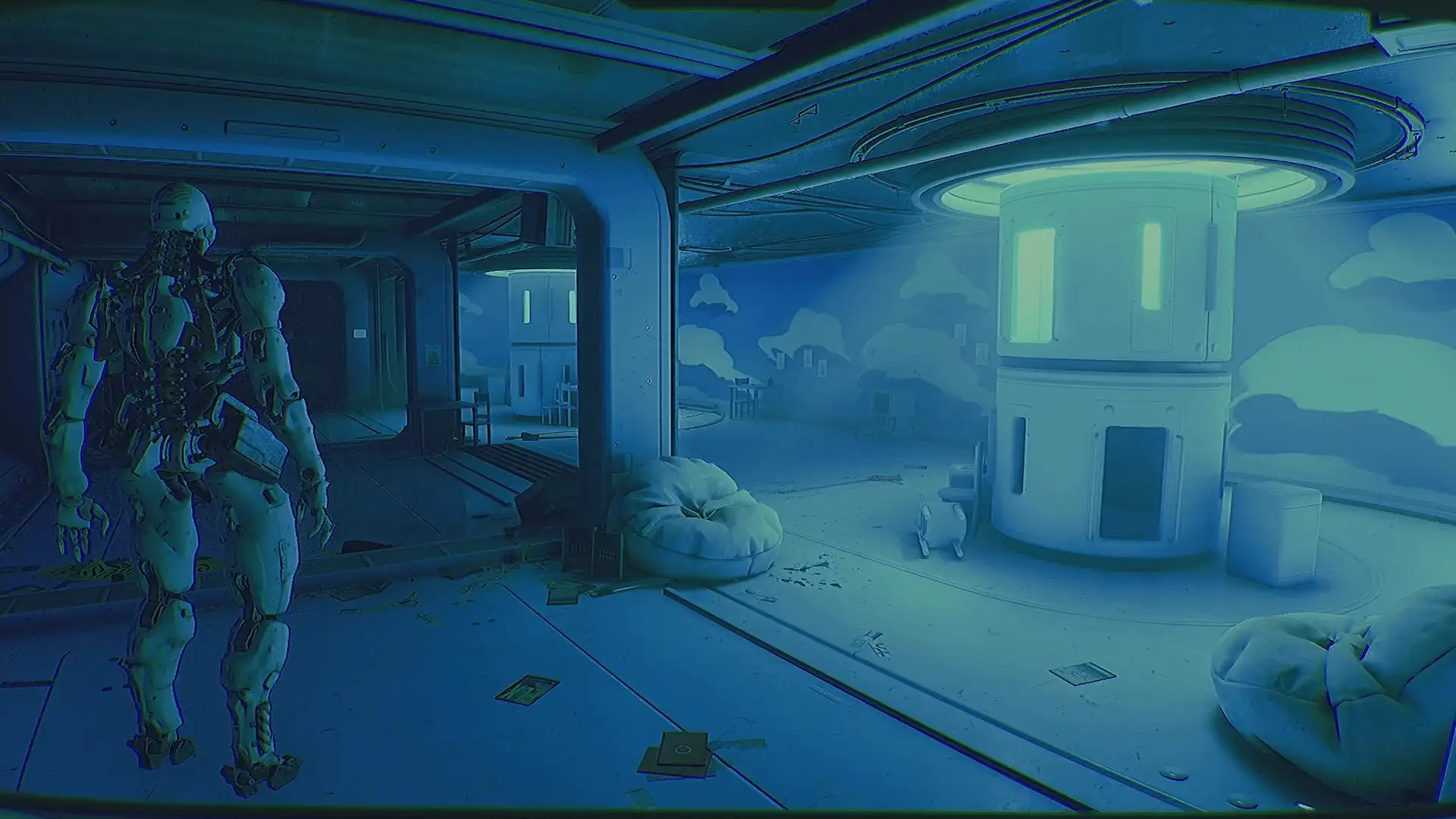
One of the boldest design choices in ROUTINE is the complete lack of an in-game map. At first, I felt almost naked without one. Most other horror games have trained me to constantly check a map to see where I am, where I have been, and where I should go next. In ROUTINE, that safety net simply does not exist. Instead, I slowly learned the layout of the stations myself, building a mental map through exploration, repetition, and a fair bit of running around aimlessly.

Not knowing exactly what is around each corner makes every step feel more deliberate and every shortcut feel earned. Exploration becomes far more organic, and the tension is heightened because you are always navigating partly from memory and partly from instinct.
This design philosophy is very intentional. As Aaron Foster explained in an interview with The Verge, he prefers games that help you forget you are playing one at all:

“I just appreciate it when I’m playing a game that I forget that I’m actually playing a game. Often UI brings you out of the experience.” – Aaron Foster

He went on to describe how he and assistant lead artist Jemma Hughes even played Conan Exiles with a self-imposed rule that they were not allowed to look at the map.

“We could only navigate the world through memory, and that changes how you interact with the spaces.” – Aaron Foster

In ROUTINE, that same philosophy turns simple navigation into a source of atmosphere, uncertainty, and by the end, I honestly did not miss the map at all.

What Came First The Alien Or The Egg?

It still amazes me that only three people worked on ROUTINE, yet the overall quality often surpasses Alien: Isolation, a game developed by hundreds of staff at Creative Assembly. It is easy to see why so many players compare the two titles. For a long time, I also assumed ROUTINE was simply an “Alien Isolation-like” game, largely because I did not realise ROUTINE had entered development first, with its vision and core mechanics already established before Alien: Isolation was even announced. Without that context, it is an understandable conclusion to reach.

Although ROUTINE did not launch until 4 December 2025, Lunar Software revealed gameplay footage on 25 June 2013. That early footage already showcased many of the core mechanics, visual ideas, and atmospheric elements present in the final game. This is why the similarities often pointed out between ROUTINE and Alien: Isolation are more about coincidence than influence. Alien: Isolation arrived on 7 October 2014, more than a year after ROUTINE’s gameplay had been shown to the public.

To clarify this further, I reached out to one of ROUTINE’s developers to ask directly about the influence of Alien: Isolation:

“Alien Isolation wasn’t really an inspiration for ROUTINE in any direct way, but the Alien movie absolutely was.The biggest inspiration for our AI probably came from the game White Day, not the newer commercial version on Steam, but the original one, which is probably quite hard to find now.There is a janitor in that game which, I am sure you would see some similarities to the T5 in ROUTINE.Alien Isolation is an amazing game, but by that point we were already well down a path of our own, and it was one we wanted to stick to regardless of our peers.” – Aaron Foster

Rather than borrowing from Alien: Isolation, ROUTINE evolved from its own early vision, inspired by classic science-fiction, the original Alien film, and unexpected influences like White Day. The result is a game that stands entirely on its own, despite the frequent comparisons.
In Development For 13 Years!?

Although ROUTINE is often described as having a thirteen-year development cycle, that figure does not accurately reflect the reality of its production. The game was first announced at Gamescom 2012, which is why many people assume development spanned thirteen uninterrupted years. In reality, development began in 2011, but the progress was far from continuous. Financial strain, health issues, and the need to take on freelance work led to long periods where only minimal progress was possible, something that is difficult to classify as active development.

The version of ROUTINE players experience today was largely rebuilt from the ground up beginning in 2020, following Lunar Software’s partnership with Raw Fury. Viewed in this context, disappointment based purely on how long the game “took” feels unfair. Indie development is rarely a straight line, and comparing one project’s timeline to another ignores the vastly different circumstances, resources, and challenges each small team faces behind the scenes.

ROUTINE’s Place Within Stalker Horror

Clock Tower, White Day, Haunting Ground, Alien: Isolation, Amnesia: The Bunker, and ROUTINE all share a defining trait: they feature stalker enemies that cannot be killed. While these enemies can often be stunned or delayed, they can never be permanently defeated. This sharply contrasts with traditional survival horror games, where most enemies can be killed, even if players are encouraged to avoid combat in order to conserve ammunition for tougher encounters.

The difference between these games is not just about tone or setting, but about how they structure player control. Specifically, it comes down to how combat functions within the core gameplay loop. Does fighting restore control, merely delay danger, or actively empower the player? Once viewed through that lens, horror games begin to fall into clearer patterns, shaped less by aesthetics and more by how they handle vulnerability, agency, and progression.

Stalker Horror

Games built around a persistent, unkillable threat that must be avoided rather than defeated. Combat cannot permanently restore control; at best, it delays danger. Tension comes from sustained vulnerability, memory-based navigation, and the constant possibility of pursuit. Environments are designed less as combat arenas and more as spaces to navigate under pressure, where knowing the layout can mean the difference between escape and capture.
Control is never fully regained.

Survival Horror

Games that emphasise scarce resources, vulnerable protagonists, puzzle-solving, and maze-like environments. Enemies can be killed, but doing so is costly. Combat is unreliable, ammunition is limited, and players must weigh whether to engage or avoid encounters. Eliminating threats can temporarily restore control, but at the risk of depleting resources needed later.
Control can be regained, but at a price.

Action Horror

Games where combat is the primary tool for progression. Enemies can be killed consistently and efficiently, and combat is actively encouraged and rewarded. Resources are often replenished through defeated enemies, precision aiming and reflexes are emphasised, and level design tends to be more linear and forward-driven.
Control is achieved through combat.

That said, some survival horror games do feature stalker enemies that cannot be killed. Resident Evil 2 included Mr X, and Resident Evil 3 featured Nemesis, both of whom pursued the player throughout large portions of their respective games. However, in both cases, the majority of standard enemies could still be killed, which keeps them firmly within the survival horror category.

For a long time, I considered Alien: Isolation to be a survival horror game, and I assumed the same was true of ROUTINE. However, after speaking with Aaron Foster, that view began to change:

“So I do not really consider ROUTINE a survival horror, as I usually class those as horror games with inventory management and enemies you can “kill,” or that feature a decent amount of combat and options for dealing with enemies.But I also understand why people still classify it as such, as its not always black and white.” – Aaron Foster

Foster’s perspective highlights the key distinction: in traditional survival horror, combat and inventory management play a central role, even if players are encouraged to conserve resources. ROUTINE, by contrast, removes the possibility of permanently eliminating threats. Combat may interrupt the threat, but it never removes it.

With this in mind, ROUTINE is technically a stalker horror. However, there is significant crossover, as the two subgenres are similar in almost every other respect. While it is true that stalker horror often strips back traditional inventory management and removes the ability to kill enemies, survival horror is ultimately defined by sustained vulnerability, not by item management. If anything, stalker horror pushes that vulnerability even further, as the player cannot rely on killing enemies to regain control.

While the distinction between survival horror and stalker horror is meaningful, both are ultimately defined by vulnerability rather than empowerment. What matters is that ROUTINE embodies everything this website aims to cover and promote. For that reason, I include stalker horror games on my survival horror games list. In a future update, I plan to tag or otherwise highlight them separately.

Final Thoughts

ROUTINE can be completed in around six hours, but I could easily have spent another six within its world. By the end, I was left wanting more. Not because the game felt incomplete, but because its atmosphere and design were so compelling that I wasn’t ready to leave. That, in many ways, is the highest compliment I can give it. There is no current plan for a ROUTINE Sequel but I am very keen to see what Lunar Software works on next and I hope they will some day release another horror game.

ROUTINE is available on Xbox and PC (Steam), and I would highly recommend experiencing it for yourself.
Xbox: https://www.xbox.com/en-us/games/store/routine/9pcjt6tlcggv
PC (Steam): https://store.steampowered.com/app/606160/ROUTINE/

Related articles

Heavy Metal Death Can – Demo Review

I was very lucky to get my hands on an early copy of the Heavy Metal Death Can demo. This was a game that immediately caught my attention after seeing a few early screenshots. A cramped submarine filled with zombies is an ideal location for a survival horror game. Before playing, I thought a submarine was a great setting for survival horror, but I did have some concerns once I started. I worried that the environment might feel too restricted. Thankfully, those concerns quickly disappeared. The level design is excellent the hub and spoke level design is as good as you will find in the Resident Evil Spencer Mansion. If you’d rather see Heavy Metal Death Can in action, watch the video version of this review below! The demo strongly reminds me of early survival horror games, particularly in how there is very clearly a right and a wrong way to progress. It is entirely possible to play for a long time while completely missing the handgun, which I absolutely loved. Survival horror is all about player vulnerability, and it does not get much more vulnerable than being forced to play without a weapon. The introduction to Resident Evil 2 gave players a handgun with just fifteen bullets, but here you start with nothing at all. This is a very brave design choice from the development team, and one I sincerely hope they keep for the final game. Heavy Metal Death Can is unapologetically a survival horror game. The demo offers around one hour of gameplay and acts as a vertical slice of what players can expect from the full release. From what I could tell, all of the core systems are working well. The only feature I was unable to use was saving, as I did not have a tape. Both the menus and the map function extremely well. I found the map especially useful, as it clearly marks which doors have been opened, which are locked, and which I have yet to try, this really helped me when I was lost. I also loved being able to rotate items in the inventory screen. This is not just an aesthetic feature, but one that actively helps with solving puzzles. Another similar gameplay mechanic borrowed from the Resident Evil 1 Remake is a defensive weapon called the KLAS. When carried, it is automatically equipped and can be used to stun enemies. It is not designed for fighting, but instead acts as a tool to help you manoeuvre around enemies when ammunition is low or when you want to conserve resources. This strongly reminded me of the single-use defensive items in the Resident Evil 1 remake. In that game, players had access to daggers, flash grenades, and stun guns, all of which would automatically trigger when grabbed by zombies, allowing you to escape without taking damage. The size of each room and the placement of zombies also brought early Resident Evil titles to mind. At times, you enter a room and are almost immediately confronted by a zombie. In other cases, an enemy may be positioned just off screen, or a sudden ambush catches you by surprise. Some players may find this approach quite claustrophobic, but this is exactly how those classic games felt, and I think the developers have captured that experience perfectly. The demo will be available to the public on the 16th of February, so be sure to wishlist Heavy Metal Death Can on Steam to stay up to date with its release. The full game launches on 28 May 2026.

Read More

Flesh Made Fear – Review

When the familiar late 90s survival horror is blended together with stylistic 80s neon grindhouse horror, the yucky gory results would be a pretty accurate description of Flesh Made Fear, the latest title by Tainted Pact games a mostly solo lead studio by Michael Cosio and published by Assemble Entertainment for PC via Steam with console ports currently in development. The premise is familiar for anyone who has played the original Resident Evil, the year is 1992 you choose between two members of an elite black ops unit known only as the Reaper Intervention Platoon or R.I.P for short, (the S.T.A.R.S jab is hilariously obvious), The unit is sent to a rural part of the United States to the small fictional sleepy town of Rotwood (Yes it even the in-game characters joke about its name) to investigate their lost comrade Cole who mysteriously disappeared while hot on the trail of a former leading CIA scientist Victor Ripper who led the MKUltria project into mind control before it was shut down with Victor continuing on with his illegal human mind experimentation. Flesh Made Fear does an interesting job at introducing its characters with some fulfilling the familiar tropes you would expect of a ragtag group of actors and actresses pretending to be an elite military special unit for a cheesy sci-fi horror movie on a direct to video budget. The game clearly knows what it is and it isn’t ashamed to indulge into the 1980s era horror tropes as a sort of mash between the gory horror of Evil Dead with the slashers of Friday the 13th and Halloween. Where the game falls short is in it’s story department, when you pass the introduction sequence and enter the town of Rotwood itself, you’ll rarely have any further interactions with any of the R.I.P team members again until near the end of the game, which is a shame because I would have loved to have seen more character development and their personalities shine more in the dreaded sticky ordeal they all now find themselves in from Victor’s twisted experiments. Gameplay-wise Flesh Made Fear does not try to reinvent the wheel of late 90s/early 00s survival horror, instead of adding in a new original gameplay mechanic or a fancy new take on survival horror, the game just reuses the ideas and styles of the first three original Resident Evils and first two original Silent Hills, to be honest there is really nothing wrong sticking to the old comfort food at your favourite restaurant here. The classic fix camera perspectives, being resourceful with your limited inventory as well as the puzzle solving are all here in the flesh (pun intended). When you boot up Flesh Made Fear you are presented with two characters to choose from, Jack Richards who has more health but a more limited inventory and Natalie Lewis with less health but makes up for it with some more extra inventory slots, whoever you choose the story is still the same, but with some different locations and buildings to explore depending on who you choose. You will need to playthrough each chacater in order to see all the locations the game has to offer, but don’t expect a Leon/A and Claire/B or Claire/A and Leon/B here outside of some plush toys to collect for a bonus unlockable. But speaking of enemies, there are only a few types you will encounter in the entire game with your main being the slow walking zombies, following by a bloater suicide variety and a licker-type fast variety, there would be some flying enemies you will encounter later towards the end of your playthrough, some more creature variety would have been welcomed but either way the game doesn’t overstay its course with each playthrough lasting roughly five to six hours depending how well you struggle against the Ripper’s madness. Regarding difficulty I find Flesh Made Fear to be on the easier side of the survival horror gaming spectrum, even on Hard difficulty which removes the blood bags that restore your character to full health, the removal of your weapon laser sight and even more limited ammo among other changes, the puzzles here are not as hair pulling or brain twisting as some might expect, they are mostly fit the right shape into the right slot or matching the object sequence with the writing of a poem. Flesh Made Fear is a game I can see myself recommending to someone who is new to the tank controls and fixed camera perspectives, it’s a deeply satisfying thrill ride of classic survival horror and 80s grindhouse horror that would please just about anyone who has even the slightest curiosity of the PS1 style creature feature gore and its a must pick for the next Halloween-themed gaming night. Flesh Made Fear is currently available on Steam: https://store.steampowered.com/app/3316350/Flesh_Made_Fear/

Read More

Carnival Massacre – Review

Carnival Massacre is a short but well made survival horror game inspired by titles such as Silent Hill, Alisa, and Heartworm. You play as Harley, who is searching for her missing sister Chloe in an abandoned carnival. It may not be the best game of 2025, but I enjoyed it enough that I wanted to cover it, especially as I worry it might be overlooked by survival horror fans. There have also been some unfounded plagiarism claims, which I address below. I also think Carnival Massacre could be an excellent introduction to the survival horror genre. I often see people ask, “I’m new to survival horror, what game should I start with?” Until now, I have struggled to give a clear answer. Heartworm is a good option, but it differs slightly from classic Resident Evil and Silent Hill because your primary tool is a camera rather than a traditional weapon. If you’d rather see Carnival Massacre in action, watch the video version of this review below! Carnival Massacre also features a camera, but here it is used to stun enemies. This is honestly one of the best avoidance mechanics I have seen in a survival horror game. It feels quite ingenious. There are also a few traditional weapons to use, including a shotgun, handgun, sniper rifle, and flamethrower Combat is not particularly difficult and can often be avoided altogether. There is a stalker enemy that cannot be killed, which adds some tension, but even this enemy is not too hard to evade. The puzzles are reasonably straightforward. You still need to think about them, but they are never so frustrating that they would put a new player off. Overall, there is nothing here that players should find overwhelmingly difficult. If someone does get completely stuck, survival horror may simply not be the genre for them. Before I talk more about the gameplay, I also want to address the plagiarism claims that have been made about the game. Alisa Controversy One of the main and most serious claims about Carnival Massacre is that it supposedly stole assets from Alisa. To be clear, there is no evidence that this happened. Casper Croes himself confirmed this in his Discord group, stating: “Just finished Carnival Massacre, definitely no assets stolen.” He added that “only ideas were somewhat taken over,” referring in particular to the way enemies in Carnival Massacre drop coins which can then be spent on resources or used to save the game. In Alisa, enemies drop tooth wheels which serve a similar purpose. Casper also pointed out that you could argue Resident Evil 4 did this first, with enemies dropping gold. I would also note that the save system is reminiscent of the ink ribbons in the early Resident Evil games. Another claim is that the menus in Carnival Massacre were copied from Alisa. When you place them side by side, the similarities are minimal. The main overlap is in the Alisa shop menu, where red curtains are used. However, red curtains are a common visual motif, and it is not as though Alisa owns the copyright to that idea. If we followed the logic that Carnival Massacre “stole” its red curtains from Alisa, we could just as easily say that Alisa “stole” the framed item displays and font style from Alone in the Dark, which would clearly be unreasonable. Many games share similar menu designs, simply because they draw from the same visual traditions. A related but less serious claim is that Carnival Massacre has been heavily influenced by Alisa. This is true to an extent, but influence is not the same thing as plagiarism. There are countless examples of indie games being openly inspired by earlier titles. In this case, it is simply an indie developer influenced by another indie developer, rather than by a major studio. It is also worth looking at the technical side of the asset theft accusation. Alisa uses pre-rendered backgrounds, which means the 3D assets are not stored in the game files in the same way they would be in a fully 3D game. What you see in-game is an image of the 3D model, rather than the model itself, so these assets cannot simply be ripped out and reused. While 3D character models do exist within the game files, even Casper has said that Carnival Massacre did not copy Alisa. All creative works are influenced by something. Alisa itself was inspired by Alice (1988), the surreal revision of Alice in Wonderland by Jan Švankmajer. Carnival Massacre would not be the game it is today without Alisa, but Alisa would not be what it is without Resident Evil, and Resident Evil owes a great deal to Alone in the Dark (1992). Survival horror continues to evolve because each new game builds on what came before. Demo VS Final Game When I first played the demo of Carnival Massacre my main concern was it would be way too easy to be a true survival horror, ammo was everywhere so there was no real need or reason to avoid the enemes. I was glad to see in the full game the ammo was easily halfed compared to the demo and instead of the ammo the player was given a camera that was probably inspired by Heartworm as mentioned earlier. In the demo, the route to the carnival takes you through a tunnel and then along a long road, where you spend around two minutes walking with very little to see or do. This slows the opening considerably. In the final game, the tunnel is blocked off and you instead follow a path through the forest. This more scenic route is clearly inspired by Heartworm and is a welcome improvement over the demo. It better explains how Harley gains access to the now closed carnival and significantly improves the overall pacing. Another feature I really appreciated was the in-game notepad. I often find it frustrating when a survival horror game expects you to search for a pen

Read More

Dead Format – Review

Dead Format is a very unique and well-crafted survival horror that simultaneously retains many core components of the genre, while also creatively bending the rules. It is a unique experience with some meta overtones, combining Survival Horror with Analog Horror in a similar vein to last year’s Among Ashes. It is very fun, but there are a couple places where there is room for improvement. You begin the game by breaking into your brother’s apartment after he had gone missing. You find some mysterious notes and a birthday present – a video tape in GHL format, which is basically VHS but with haunting properties. You pop it into the VCR and suddenly the front door transports you into the universe of the film. You then proceed to find other films, and go back and forth between them solving puzzles, facing enemies, and trying to untangle your brother’s disappearance. The game features a limited inventory, some very solid puzzles, a mixture of both classic Resident Evil combat with a Tyrant-style stalker enemy, lots of backtracking to explore previous areas, optional secrets, and some really cool atmospheres. Every film has a Live Action sequence that you can actually watch on the television before entering its universe, and these are GREAT. This includes: very convincing German Expressionist horror, The Evil Dead type practical effects, a 80’s bright and colorful slasher film… and each world also has a type of filter to make you feel part of that era. The gameplay has a good balance between puzzles, exploration, and combat – though the combat is not really a highlight. There are way too many resources for a very small number of enemies, so I never felt that true scarcity-worry that you expect in this genre. The stalker enemy is very intimidating though, and the game does deliver some very tense encounters despite the imbalance of the combat. The level design is well-built, but there is no map. For the most part, the areas are manageable enough to navigate, but there are definitely times where a map would have enhanced the experience. The puzzles are about 50% simple inventory interactions, but the rest are very clever and unique. The game took me around 8 hours to finish, so I do wish the game was a bit longer and had more films to explore. The ending was also a little abrupt, though I did find a couple things that seem to indicate replayability and perhaps alternate endings. That said, I absolutely recommend this game if you enjoy first person survival horror / survival horror adjacent games like Among Ashes, Resident Evil 7, or Routine. Dead Format is definitely one of the better horror games I’ve played this year. You can buy or wishlist Dead Format on Steam now: steampowered.com/app/3399290/Dead_Format

Read More

A.I.L.A – Review

Disclaimer: I received a free review key for A.I.L.A from the publisher. This does not affect my opinions, all thoughts and impressions in this review are my own. A.I.L.A is not a typical survival horror experience, and the developers are upfront about that. The Steam description makes it clear that the game blends multiple horror subgenres, including survival horror, psychological horror, and action horror. It draws from all corners of the horror genre to create something that feels familiar yet unpredictable. Fans of Resident Evil will immediately notice the countless references hidden throughout its levels. However, it is not just Easter eggs. A.I.L.A also borrows from the core gameplay loop of Resident Evil and Alone in the Dark: explore, solve puzzles, fight, repeat. The hub-and-spoke level design reinforces that classic structure, while the constant shifts in tone and setting keep it from feeling derivative. There is plenty of variety too, with environments ranging from a derelict farmhouse to a pirate’s ghost ship, each offering a distinct atmosphere that prevents the experience from becoming stale. If you’d rather see A.I.L.A in action, watch the video version of this review below! If you are here to find out whether A.I.L.A is worth playing, let me save you some time: Yes! I went in with no expectations, having never played Pulsatrix Studios’ earlier title Fobia – St. Dinfna Hotel. Although it took a little time for the game to grow on me, once it did, I could not put it down. In the end, A.I.L.A worked for me because it delivered a completely different kind of horror experience that I did not realise I was missing. The Meta World of A.I.L.A In A.I.L.A, you step into the role of Samuel, a beta tester for a VR project that shares the same title. The experience often felt surreal to me, as I was reviewing a game built around the idea of reviewing a game. Even the process of installing the in-game system is carried out manually, and this idea becomes much more intricate during a later puzzle, the whole game is very meta. Your main hub area is Samuel’s apartment, which might sound like an unexciting location, but there is always something new happening. The space is detailed and changes a lot through the game. The apartment sequences reminded me of Silent Hill 4: The Room, as well as the film 1408, with their sense of being trapped in a room you can’t escape. A large part of the game’s appeal comes from never knowing where you will end up next. Each scenario is set in a different location or time period, and the shifts are dramatic enough that you can never be certain what might be waiting behind the next door. The Many Doors of A.I.L.A There is something iconic about the door animations in the early Resident Evil games, which is why our logo features a red door. You never quite knew what was waiting on the other side which added to the tension that defined classic survival horror. In many ways, A.I.L.A could almost be described as a door-opening simulator, although I am fairly sure that is not an actual genre. In the early Resident Evil titles, the loading screens created a real sense of anticipation, and Pulsatrix Studios has taken that concept and reimagined it in a modern way. In the first area, for example, you must navigate a maze of countless doors, never knowing what you will step into next. Rooms can change after you leave them, and sometimes even the moment you turn your back, objects shift or rearrange themselves, keeping you constantly on edge. Mannequins and other objects shift whenever you turn your back on them, creating a constant sense of uncertainty. Not knowing what might be behind you, or what might be waiting through the next door, is when the horror is at its strongest. These moments work because the unknown is always more frightening than what is in front of you. In a later level, you find yourself in a Resident Evil 7 style farmhouse, fighting aliens. These encounters lean far more towards action horror than psychological horror. The change of pace does help to keep things lively, but the alien enemies are among the weakest enemies in the game (there are much better enemy types later). They are more irritating than frightening, and once the action takes over, some of the tension disappears. When you understand exactly what you are dealing with, the fear of the unknown is lost. Although I was not a fan of the alien enemies, I did enjoy the level itself, particularly the visuals of the farmhouse. In fact, the graphical presentation throughout the entire game is impressive, although I will touch more on that later. What made the farmhouse especially engaging was its puzzles. The whole location feels like a large, interconnected puzzle box waiting to be solved, and that sense of discovery is what kept me playing. Puzzle Solving A large portion of your time will be spent solving puzzles, and for me they are pitched at just the right level of difficulty. They are not so easy that they become dull, yet not so challenging that you feel the need to look up the solutions online. There were moments when I was close to giving up, but whenever I stopped and searched a little longer, the clue I needed was usually nearby and often in the very room I was standing in. If you approach the game in the same way you would an early Resident Evil title, you will be fine. By that I mean you should search everything and read every clue. Searching highly detailed environments is one of the reasons I love survival horror games. I recently reviewed Tormented Souls 2, and one of my favourite aspects of that game was exploring its environments. However, when you explore in third-person with a fixed camera that is quite far back, it can be difficult

Read More

Greek Tragedy – Review

Greek Tragedy is another Halloween release: a fixed-camera PSX horror game that kind of slipped under the radar. Amidst the release of absolute classics this month – Tormented Souls 2, Flesh Made Fear, and Echoes of the Living – it didn’t really get much notice. Well, now that I have finished it (with 3 of the endings), I can’t really say it is competitive with these other titles – especially not as a survival horror game.  It certainly shares some of the hallmark traits of the genre; there are fixed cameras, puzzles, and a sense of vulnerability. But it also subverts so many others, to a point where I don’t even know how to classify it. No map, no inventory management, shoddy combat, linear level design, and an absolutely bizarre plot.  The combat is somewhat similar to the developer selewi’s games – which DO feel like survival horror despite only having a singular unbeatable stalker enemy. Here, you only have a taser gun that merely momentarily pauses the hooded enemies that relentlessly chase you. This flimsy combat system makes the enemies feel more like a nuisance than intimidating.  The real gameplay here is the puzzles, but unfortunately they are a pretty mixed bag. There are a few that were interesting and clever, but there are many others that are either too simple, bizarrely constructed (in a bad way), or just slightly glorified keys. The overall atmosphere is also a mixed bag; while the art style itself is quite charming, the actual content of the college campus, the characters, the vague fraternity/cult story – I just don’t really understand what the atmosphere is supposed to be.  The game took about 2 hours to finish, and it left me feeling a bit… empty. I don’t really understand what the vision was for the developer, on both a mechanical gameplay level or the content and story. Some puzzle fans may enjoy moments of the game, but I really cannot recommend it for classic survival horror fans. Greek Tragedy is available for Steam, Xbox, PlayStation and Nintendo Switch

Read More