
How ROUTINE Changed My View of Survival Horror
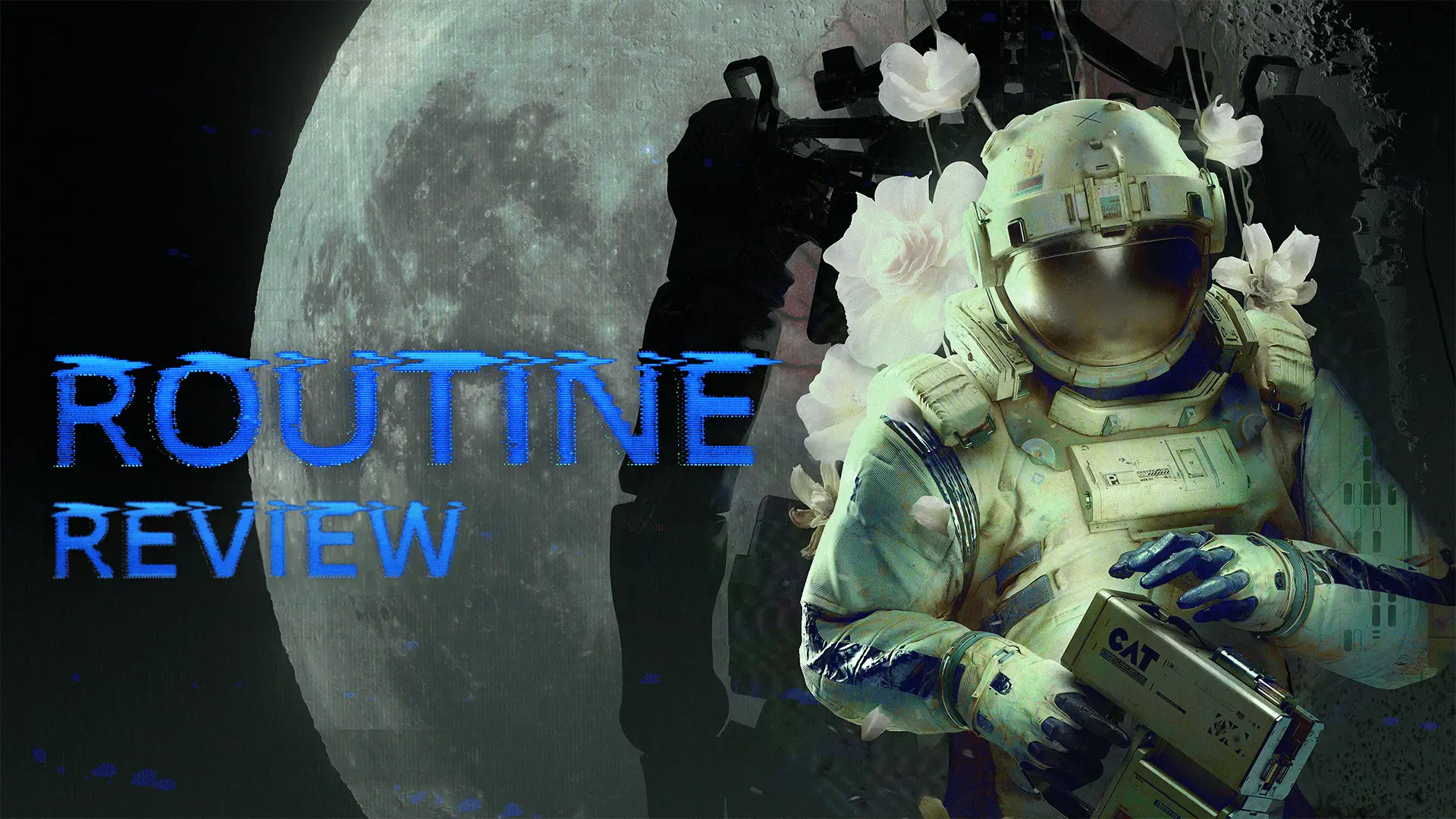
ROUTINE is often compared to Alien: Isolation, yet its vision and core mechanics were already established before Alien: Isolation was even announced. In this article, I break down why the similarities are more coincidental than influential, explore the reality behind ROUTINE’s long and turbulent development cycle, and examine where it truly belongs within the stalker horror subgenre. There are some games that inspire me to become a developer and create my own horror experience, but ROUTINE is not one of them. The 3D models and textures are so high quality, the atmosphere so believable, and the sound design so flawless that I know I could never hope to compete with it. Instead of pushing me into game development, ROUTINE is keeping me out of it, leaving the work to people who clearly know what they are doing. If you’d rather see ROUTINE in action, watch the video version of this review below! What Is ROUTINE? ROUTINE is a first-person sci-fi stalker horror game set within an abandoned lunar base, designed around a 1980s vision of the future. The game takes place in a distinctly analogue world, one that often feels like you are playing through a CRT display. This effect is pushed even further when viewing the environment through the handheld Cosmonaut Assistance Tool (C.A.T), which intentionally drops the resolution even lower. What makes ROUTINE so distinctive is how it balances extremes. It delivers moments of hyper-realistic detail, where individual fingerprints can be seen on monitors, while simultaneously presenting deliberately low-resolution visuals. Viewing enemies through the C.A.T, combined with the thick, oppressive atmosphere, creates a level of tension that is difficult to fully explain, but very effective. Somehow, this contrast makes the game feel even more unsettling. The fear of the unknown is multiplied when everything in the viewpoint isnt crystal clear. There is no HUD, inventory, or traditional menus of any kind. There isn’t even a way to pause the game. You can press Start, but the world keeps moving, so you rarely feel safe. Even saving your progress doesn’t always guarantee safety. Save screens and menus are projected onto the walls of the environment, and you interact with them by walking up and using your C.A.T device. Unlike the comforting save rooms in Resident Evil, you are not completely protected while doing this. Most of the time you will be fine, but there are a few areas in the game where using these terminals still puts you at risk which only adds to the tension. Despite wearing a spacesuit in the game, you are incredibly nimble. You can crouch very low to the ground, low enough to look through small gaps, crawl through vents, or peek around corners for Type-05 (T5) enemies on patrol. The T5 is not faster than you, but it is unpredictable and relentless. You can usually escape, but it is always tense. You get one chance to break free if it grabs you, but if it catches you again, it is game over. The heavy thud of its footsteps gives you a rough idea of how close it is, and hearing that sound grow nearer is deeply unnerving. One of the boldest design choices in ROUTINE is the complete lack of an in-game map. At first, I felt almost naked without one. Most other horror games have trained me to constantly check a map to see where I am, where I have been, and where I should go next. In ROUTINE, that safety net simply does not exist. Instead, I slowly learned the layout of the stations myself, building a mental map through exploration, repetition, and a fair bit of running around aimlessly. Not knowing exactly what is around each corner makes every step feel more deliberate and every shortcut feel earned. Exploration becomes far more organic, and the tension is heightened because you are always navigating partly from memory and partly from instinct.This design philosophy is very intentional. As Aaron Foster explained in an interview with The Verge, he prefers games that help you forget you are playing one at all: “I just appreciate it when I’m playing a game that I forget that I’m actually playing a game. Often UI brings you out of the experience.” – Aaron Foster He went on to describe how he and assistant lead artist Jemma Hughes even played Conan Exiles with a self-imposed rule that they were not allowed to look at the map. “We could only navigate the world through memory, and that changes how you interact with the spaces.” – Aaron Foster In ROUTINE, that same philosophy turns simple navigation into a source of atmosphere, uncertainty, and by the end, I honestly did not miss the map at all. What Came First The Alien Or The Egg? It still amazes me that only three people worked on ROUTINE, yet the overall quality often surpasses Alien: Isolation, a game developed by hundreds of staff at Creative Assembly. It is easy to see why so many players compare the two titles. For a long time, I also assumed ROUTINE was simply an “Alien Isolation-like” game, largely because I did not realise ROUTINE had entered development first, with its vision and core mechanics already established before Alien: Isolation was even announced. Without that context, it is an understandable conclusion to reach. Although ROUTINE did not launch until 4 December 2025, Lunar Software revealed gameplay footage on 25 June 2013. That early footage already showcased many of the core mechanics, visual ideas, and atmospheric elements present in the final game. This is why the similarities often pointed out between ROUTINE and Alien: Isolation are more about coincidence than influence. Alien: Isolation arrived on 7 October 2014, more than a year after ROUTINE’s gameplay had been shown to the public. To clarify this further, I reached out to one of ROUTINE’s developers to ask directly about the influence of Alien: Isolation: “Alien Isolation wasn’t really an inspiration for ROUTINE in any direct way, but the Alien movie absolutely
Heavy Metal Death Can – Demo Review
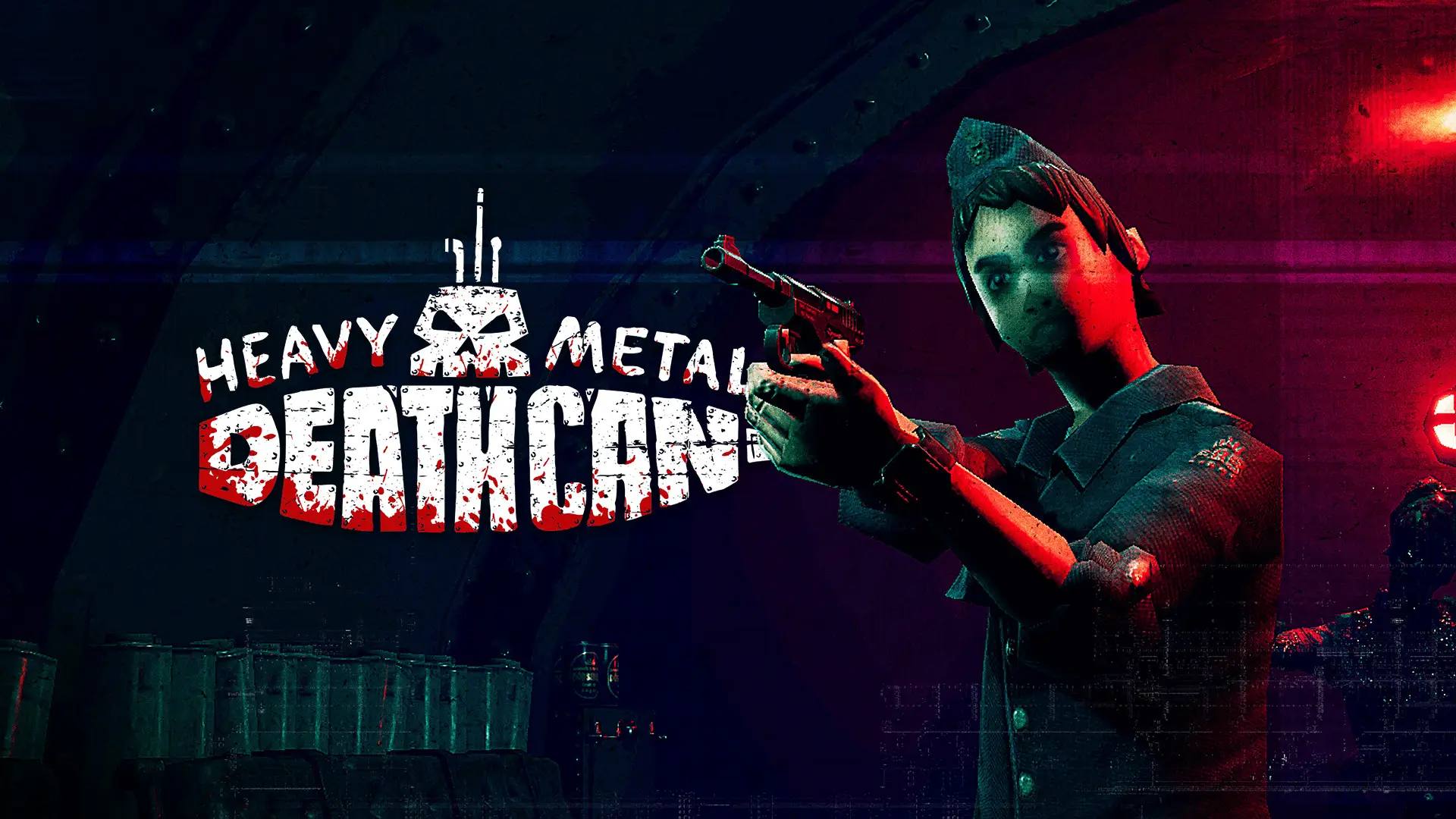
I was very lucky to get my hands on an early copy of the Heavy Metal Death Can demo. This was a game that immediately caught my attention after seeing a few early screenshots. A cramped submarine filled with zombies is an ideal location for a survival horror game. Before playing, I thought a submarine was a great setting for survival horror, but I did have some concerns once I started. I worried that the environment might feel too restricted. Thankfully, those concerns quickly disappeared. The level design is excellent the hub and spoke level design is as good as you will find in the Resident Evil Spencer Mansion. If you’d rather see Heavy Metal Death Can in action, watch the video version of this review below! The demo strongly reminds me of early survival horror games, particularly in how there is very clearly a right and a wrong way to progress. It is entirely possible to play for a long time while completely missing the handgun, which I absolutely loved. Survival horror is all about player vulnerability, and it does not get much more vulnerable than being forced to play without a weapon. The introduction to Resident Evil 2 gave players a handgun with just fifteen bullets, but here you start with nothing at all. This is a very brave design choice from the development team, and one I sincerely hope they keep for the final game. Heavy Metal Death Can is unapologetically a survival horror game. The demo offers around one hour of gameplay and acts as a vertical slice of what players can expect from the full release. From what I could tell, all of the core systems are working well. The only feature I was unable to use was saving, as I did not have a tape. Both the menus and the map function extremely well. I found the map especially useful, as it clearly marks which doors have been opened, which are locked, and which I have yet to try, this really helped me when I was lost. I also loved being able to rotate items in the inventory screen. This is not just an aesthetic feature, but one that actively helps with solving puzzles. Another similar gameplay mechanic borrowed from the Resident Evil 1 Remake is a defensive weapon called the KLAS. When carried, it is automatically equipped and can be used to stun enemies. It is not designed for fighting, but instead acts as a tool to help you manoeuvre around enemies when ammunition is low or when you want to conserve resources. This strongly reminded me of the single-use defensive items in the Resident Evil 1 remake. In that game, players had access to daggers, flash grenades, and stun guns, all of which would automatically trigger when grabbed by zombies, allowing you to escape without taking damage. The size of each room and the placement of zombies also brought early Resident Evil titles to mind. At times, you enter a room and are almost immediately confronted by a zombie. In other cases, an enemy may be positioned just off screen, or a sudden ambush catches you by surprise. Some players may find this approach quite claustrophobic, but this is exactly how those classic games felt, and I think the developers have captured that experience perfectly. The demo will be available to the public on the 16th of February, so be sure to wishlist Heavy Metal Death Can on Steam to stay up to date with its release. The full game launches on 28 May 2026.